What to expect on your first flight
-
Before you leave
Book and check the details
Reserve your departure online and you'll get a confirmation with the meeting point. Departures meet on the sand a short walk north of Whalers Village — look for the yellow PARASAIL umbrellas.
-
30 minutes before
Check in on the beach
Sign your waiver before you arrive — the link comes in your confirmation email, and a parent or guardian signs for anyone under 18. On the day, find the crew under the umbrellas and give your name. That’s check-in.
-
Departure
Shuttle out to the boat
From here you'll board our shuttle boat, which takes 6 at a time out to the parasail boat. The shuttle can be a fun ride in itself — be prepared to get your feet wet, and keep an eye out for turtles on the way.
-
On the water
Life jacket and safety brief
Once you're aboard the parasail boat, the captain and crew run the safety briefing and hand out life jackets. Nothing to memorise — they walk you through the hand signals for 'take me higher' and 'bring me down', and that's the whole curriculum.
-
Your turn
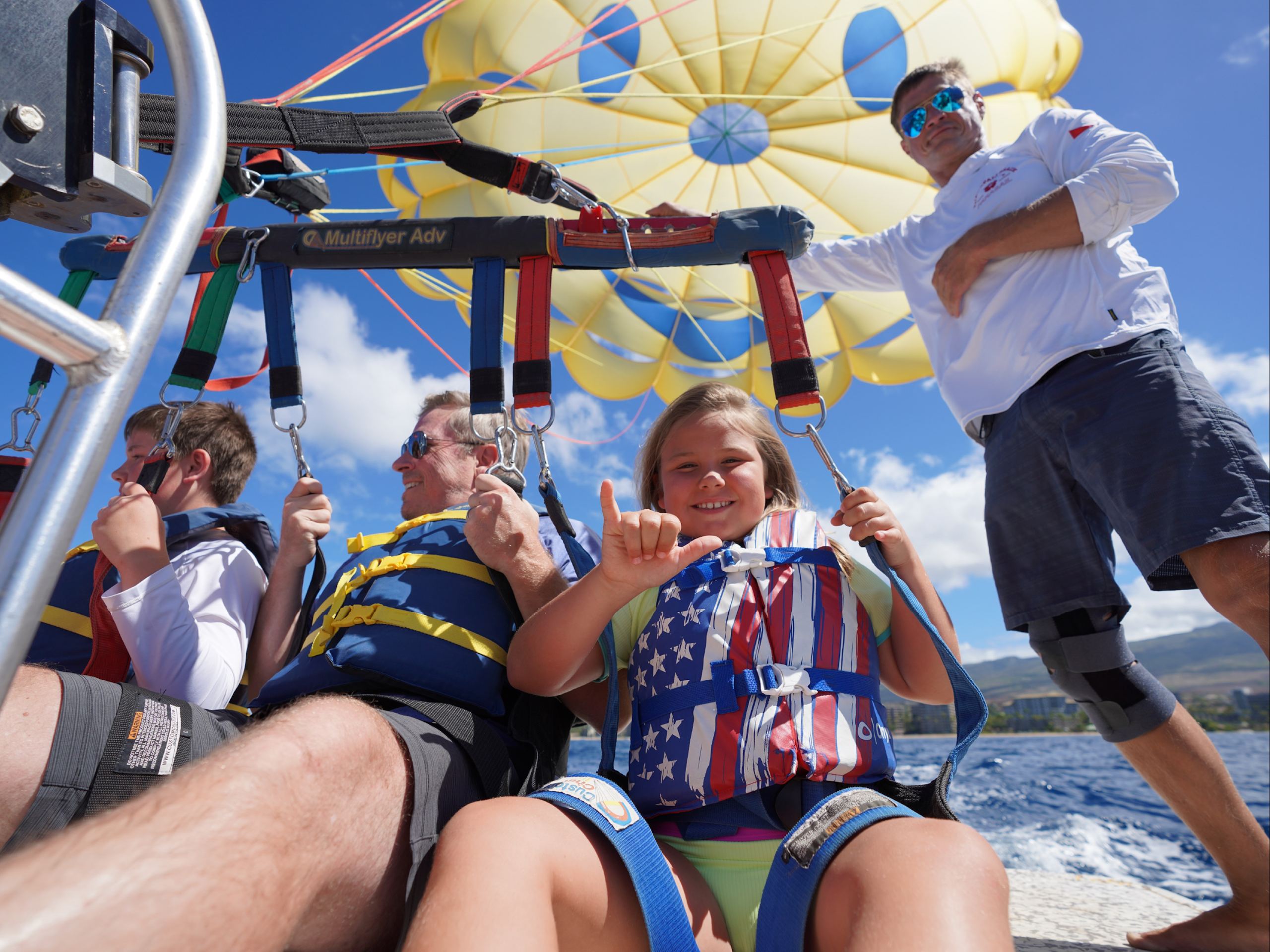
Harness up on the deck
The crew fits your harness while you're still in your seat on the boat. When they call you up to the flight deck, they clip you in. You sit back into it — nothing to hold on to unless you want to, and nothing to steer.
-
Air time
Up to 1,200 feet
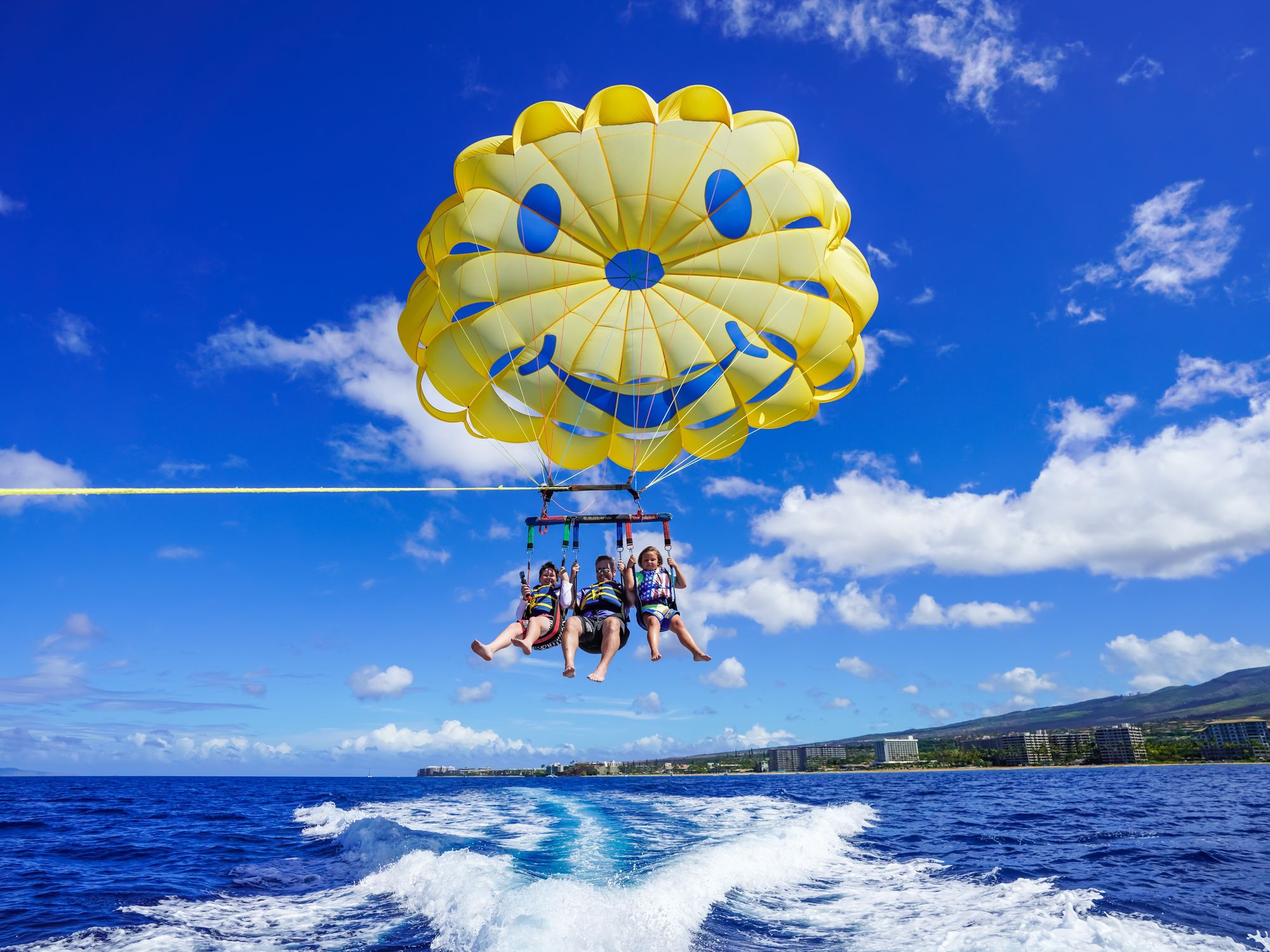
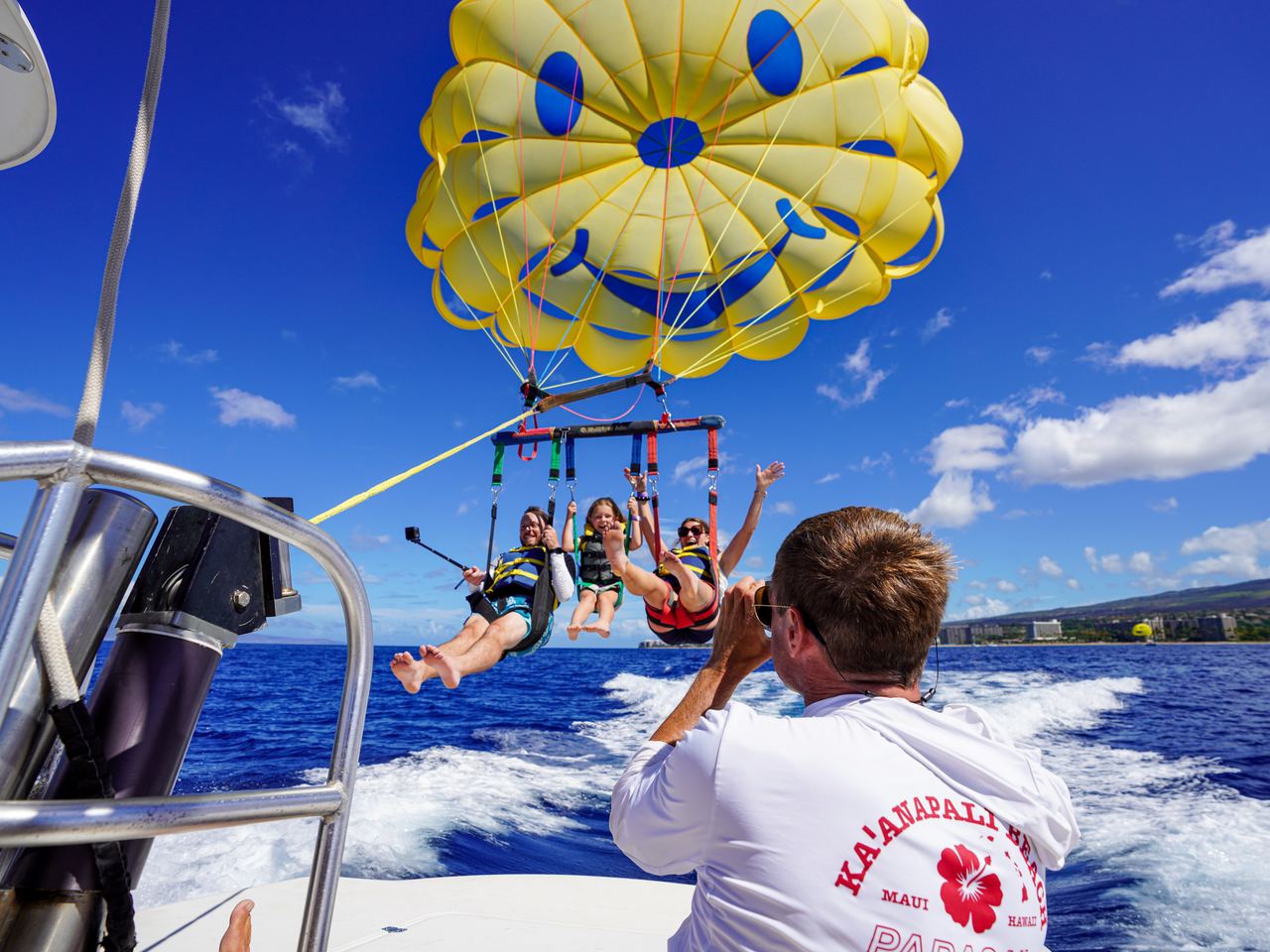
The winch pays the line out and you rise. Flight times vary with the weather — usually 8 to 14 minutes in the air — and the boat runs a loop of the coast while you're up there. Want to go higher, lower, or get your toes dipped at the end? Signal the crew.
-
Back aboard
Dry landing, then the beach
The winch brings you back down onto the same deck you left. Once everyone's flown, the boat heads in and the shuttle runs you back to the sand. Whole trip runs about an hour depending on how many flyers are aboard.
What it feels like
Quieter than you're picturing
The lift is gradual, not a jolt — the winch pays the line out and you rise. Because you're moving with the air, there's almost no wind in your face. The engine noise falls away behind you.
What people remark on afterwards is the silence and the view: the resort strip and Black Rock below, Lahaina down the coast, Lānaʻi and Molokaʻi across the channel, and the West Maui Mountains behind you.
Bring
- Reef-safe sunscreen, applied before you board
- Swimsuit or shorts and a rash guard
- A strap for your sunglasses
- A phone if you want your own photos
Leave behind
- Hats and loose jewellery — they don't come back
- Anything you can't get wet or drop
- Big bags; the boat has limited space
Good to know
- Arrive 30 minutes before departure, and allow extra time to find parking
- Solo flyers 130 lb minimum; tandem 125–560 lb combined
- Ages 5 and up
- Crew speaks English, Spanish and Japanese
First-timer questions
Do I need to know how to swim?
No. Takeoff and landing are both on the boat deck and everyone wears a life jacket.
Can I bring my phone up?
Yes, at your own risk — plenty of people do. A wrist strap or a floating case is a good idea, because anything you drop from 1,200 feet is gone. The crew also shoots photos from the boat.
Will I feel seasick?
The water off Kaanapali is usually calm, and the trip is short. If you're sensitive, take something an hour before and book a morning departure when the water is flattest.
How many people are on the boat?
Our two newest boats carry up to 12 passengers. Flights are shared, so you'll be on board with other guests unless you book a private tour.
Can I fly if I'm pregnant?
No. We can't take anyone who is pregnant on the boat at all — not flying, and not riding along as a passenger.
What about back or neck problems?
The harness takes your weight at the hips and the landing is soft, but check with your doctor first if you have back, neck or heart conditions, or recent surgery.