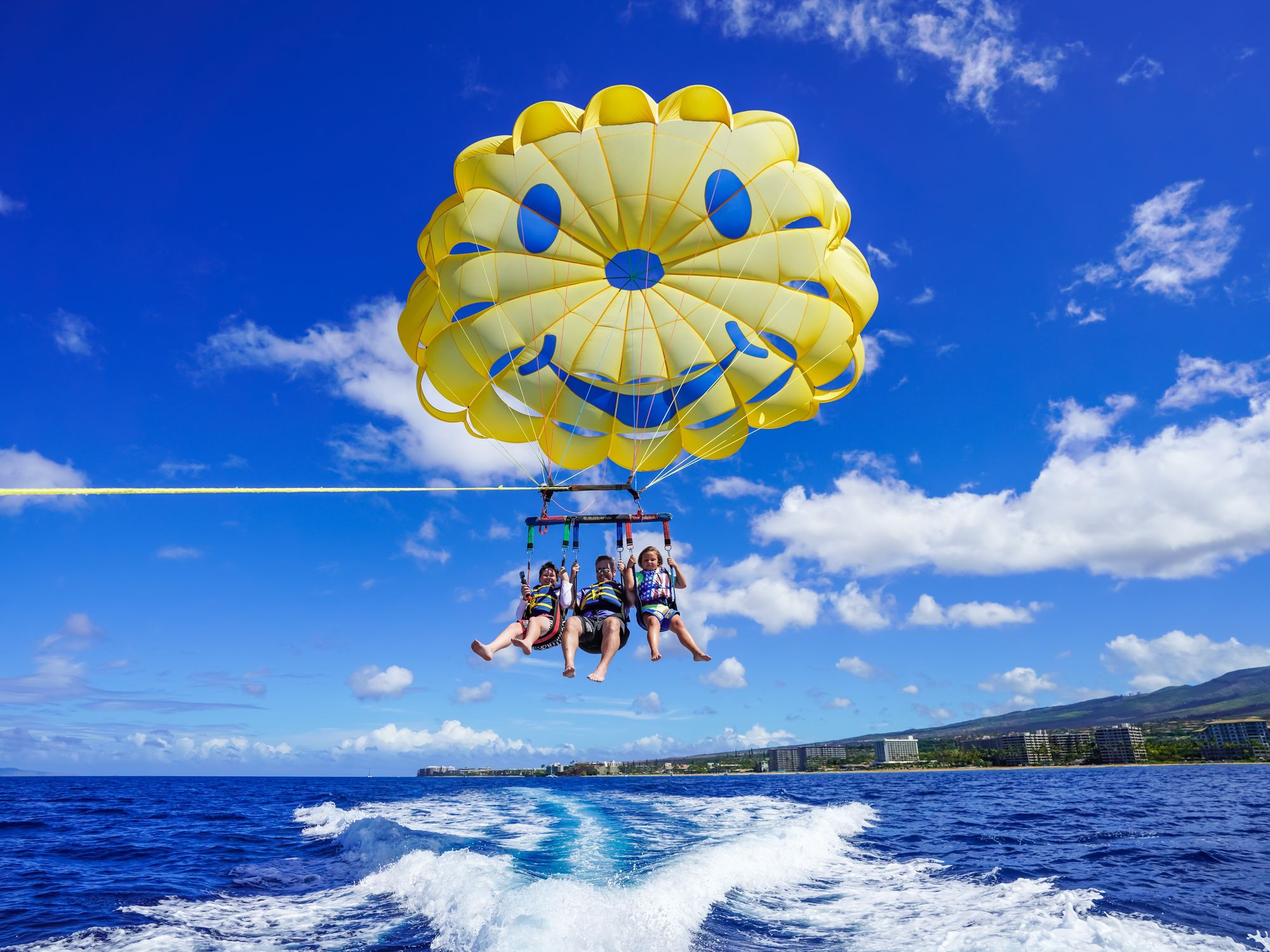
Why it's gentler than it looks
From the beach, a parasail looks like a thrill ride. In the air it's the opposite. The parasail rises slowly on a winch, there's no wind rush because you're moving with the air, and once the line is out you're barely aware of the boat. Most kids describe it as floating, and most parents are surprised how quiet it is.
There is nothing for your child to operate. No steering, no pedals, no instructions to remember. The crew handles the harness, the captain handles the line, and the flyer sits.
You never leave the boat wet
Both takeoff and landing happen on the deck. Your child steps into the harness standing up, lifts off from the back of the boat, and comes back down onto the same platform. Nobody swims, nobody gets dragged, and nobody has to climb back aboard. If they want a dip in the ocean at the end, that's a request the crew grants — not part of the flight.
Fly with them, not behind them
Solo flights need a 130 lb minimum, so most children go tandem with a parent or triple with two family members. That solves the nerves problem better than any explanation from us: a five-year-old holding a parent's hand at 1,200 feet is a different experience than going up alone.
Tandem runs 125–560 lb combined, which covers nearly every adult-child pairing. The crew works out the combinations on the boat once they can see the group.
What the safety actually consists of
USCG-certified captains, harnesses and lines inspected and maintained on a schedule, and a hard rule about conditions: if the wind or sea state is outside our limits, we don't fly. You get rescheduled at no charge or refunded in full. Nobody on our crew is deciding whether to push it.
Dave Vogt holds the Water Sports Industry Association's Award of Excellence for his contributions to the parasail industry, and has flown more than 25,000 people across Hawaiʻi, California, Florida, Mexico and Belize.
When to wait a year
A child who genuinely doesn't want to go shouldn't be talked into it — being harnessed in is not the moment to change your mind. Boat time is the other consideration: the trip runs about an hour, and a child who struggles on boats will feel that more than the flight itself. Anyone can stay aboard and watch; they still get the ride.